Webinar | From Strategy to First-in-Human - A Practical Roadmap for Biotech Development
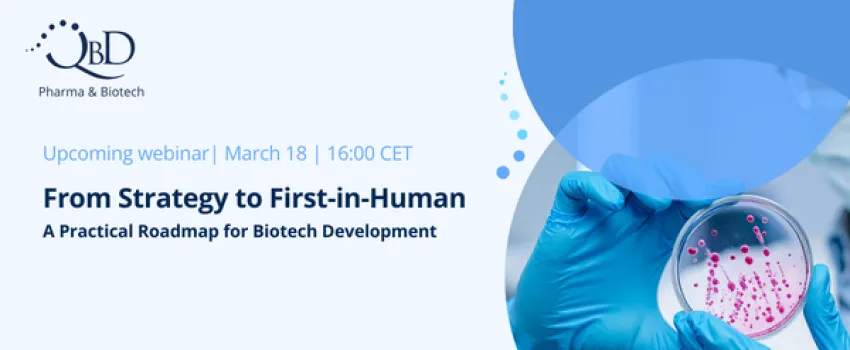
Early-stage biotech teams often struggle to translate scientific innovation into first-in-human readiness. This webinar provides practical guidance to help teams build a clear, scalable development pathway that aligns regulatory strategy, CMC, quality, and clinical planning. Reducing risk, avoiding delays, and staying inspection-ready without overbuilding internal structures.
Biotech startups and early-stage companies face a critical transition when moving from scientific innovation to first-in-human clinical trials. At this stage, early strategic decisions often determine whether development progresses smoothly or becomes slowed by regulatory questions, CTA delays, and costly rework.
Fragmented regulatory planning, limited internal quality and pharmacovigilance infrastructure, and misalignment between development stages are common challenges across early biotech programs. These gaps frequently remain hidden until late in development, when timelines and budgets are already under pressure.
Based on real-world regulatory interactions and development experience, this webinar explores the full journey from early strategic planning to first-in-human readiness highlighting how regulatory strategy, scientific advice, CMC and GMP preparedness, and early clinical and safety oversight must work together as a coherent pathway.
Rather than focusing on individual services, the session provides a practical roadmap to help biotech teams make better early decisions, align critical activities, and progress toward first-in-human studies with greater confidence and control.
What you'll learn
- How early strategic choices affect CTA readiness, regulatory interactions, and first-in-human timelines.
- Common gaps that cause delays and rework, and how to spot them early.
- How to align regulatory strategy, CMC, quality systems, and safety oversight across development stages.
- What practical readiness looks like and how to build scalable foundations without unnecessary complexity.
- Why an end-to-end, integrated approach reduces regulatory risk and speeds predictable execution.